The West vs. Eastern Europe: A Comparison of Excess Mortality Curves
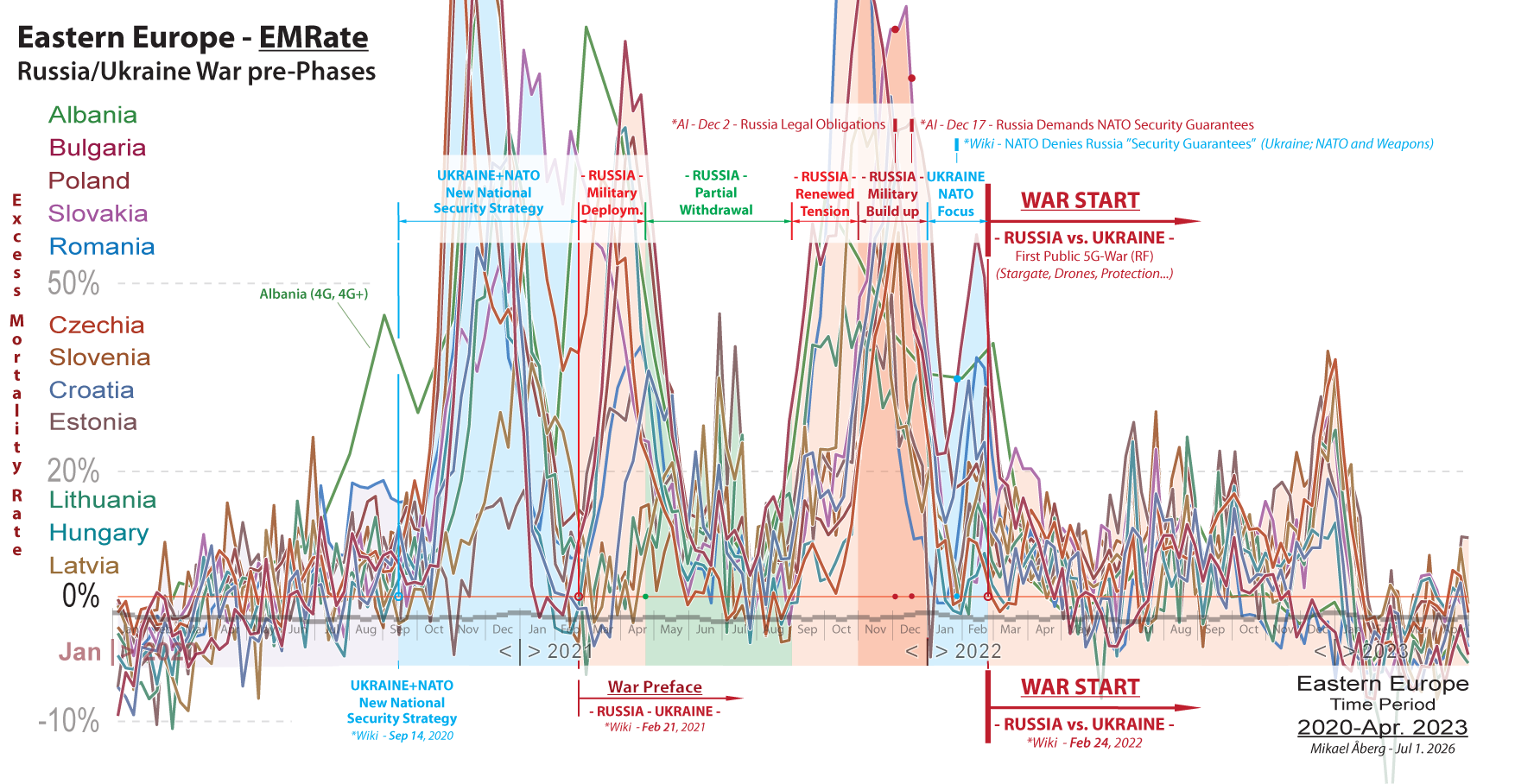
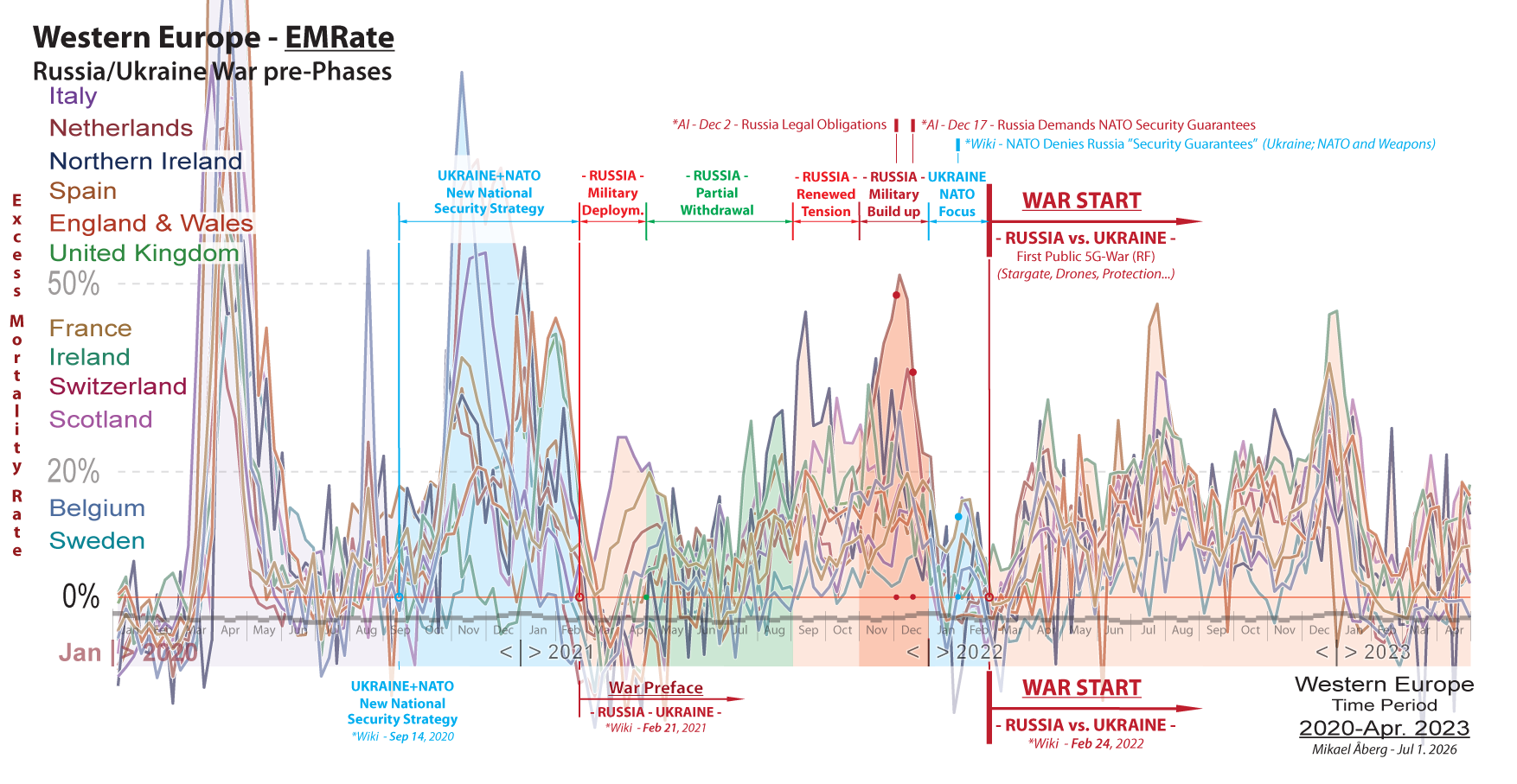
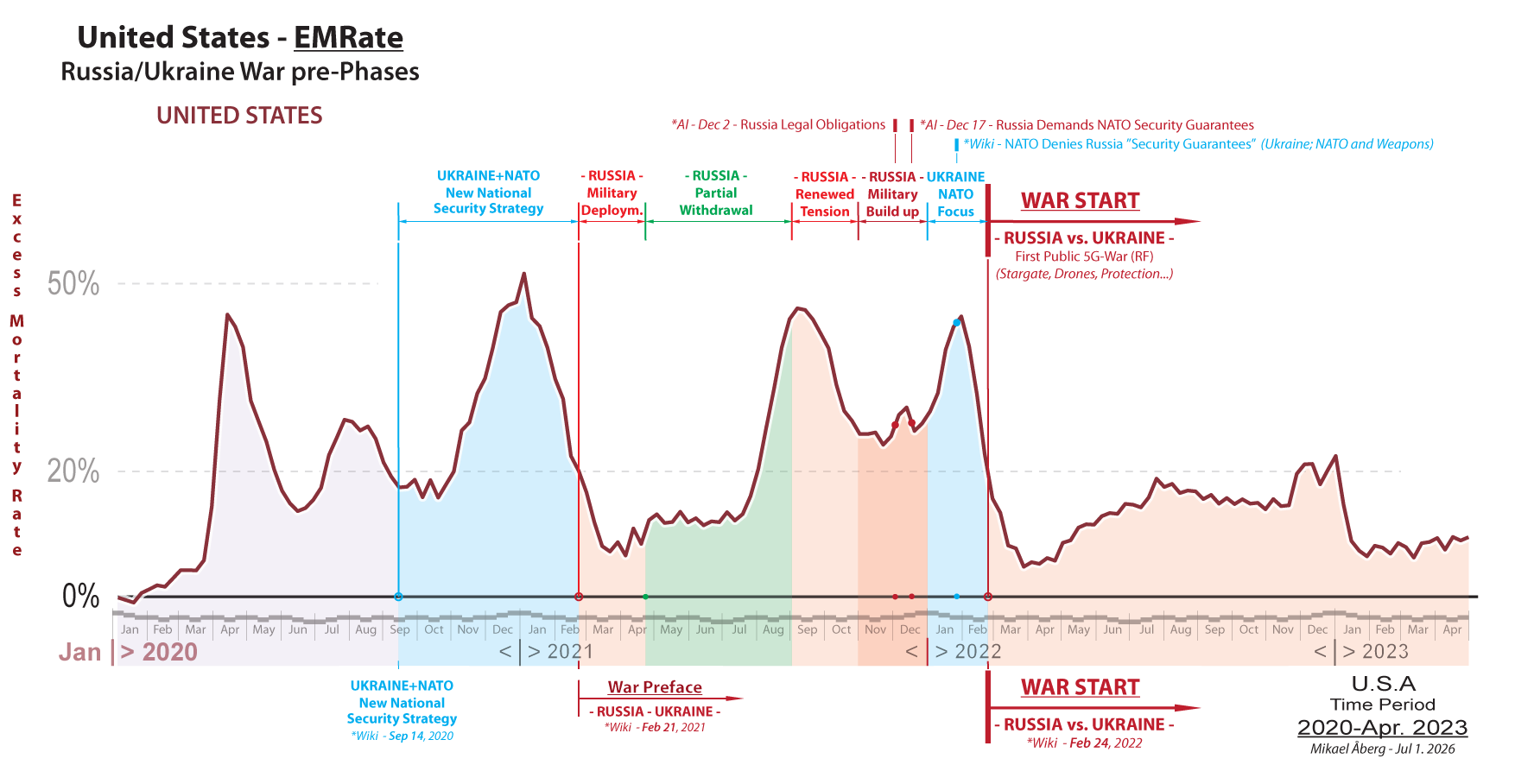
TOP CHART – WESTERN COUNTRIES Introduction of 5G Systems Start-up Periods 1 & 2 General Mortality Correlation [UP 1 & 2] The lower excess mortality rates (EMRate) between “UP 1” and “UP 2” are due to a shift in the focus of network expansion from the rollout of 4G+/5G nodes to the installation/upgrade of new 4G/5G hardware and infrastructure [preparations, planning] in anticipation of the next rollout phase. After Start-up Period 1 [4G/5G Rollout and Mortality] Geopolitical realities are also beginning to play an increasingly significant role in relation to the background, start, and development of the Russia-Ukraine war [XG war, drones, etc.]. The factors listed above influenced mortality trends and the EMRate for each country individually, which is reflected to some extent in the more varied distribution of mortality rates among countries up until the start of the Russia-Ukraine war, only to return to a more varied distribution pattern some time afterward. However, all countries [East, West] experienced very high to extremely high EMRate median values over the time period, with the exception of high values in Sweden (+3.5%), Romania (+4.3%), Latvia (+4.3%), and Lithuania (+4.5%). No country experienced moderate or low median values [measurement period 2020–2024]. During the measurement period, the U.S. had the highest median EMRate (+16.4%) of all countries surveyed; it should be noted that as of now [Dec. 2025], countries in the Western world—including those not included in this survey—continue to have high to extremely high mortality rates [EMRate].
|
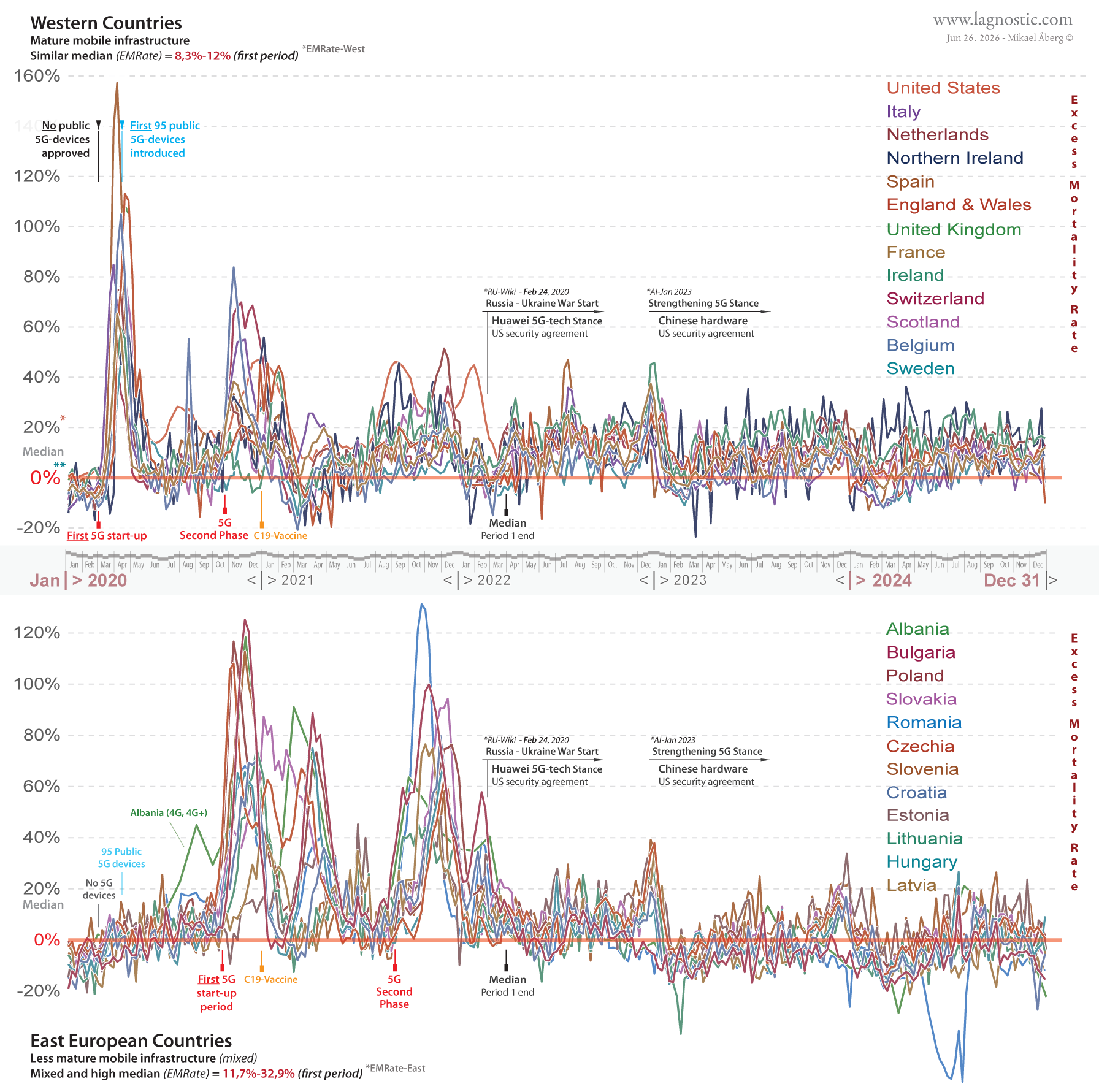 |
BOTTOM CHART – EASTERN EUROPE The Eastern European countries shown in the lower graph followed the same strategy as the Western world, as shown in the upper graph — 5G rollout in densely populated areas — with the difference, however, that these countries’ rollout phase began about half a year after the West [starting in October 2020], primarily due to a weaker starting point in terms of mobile network infrastructure and deployment. Expansion of the 3G/4G Network Hardware and Software Updates (5G/4G+) Startup Phase 1 Startup Phase 2 Exception Albania The Impact of the Russia-Ukraine War [US Security Agreement]
Note. Western countries [TOP GRAPH] also use Chinese mobile infrastructure, which is why similar patterns can be observed, albeit to a lesser extent; our dependence on these products is therefore lower, and an active campaign is underway to replace Chinese network technology with U.S.-approved mobile technology, infrastructure, and software. |
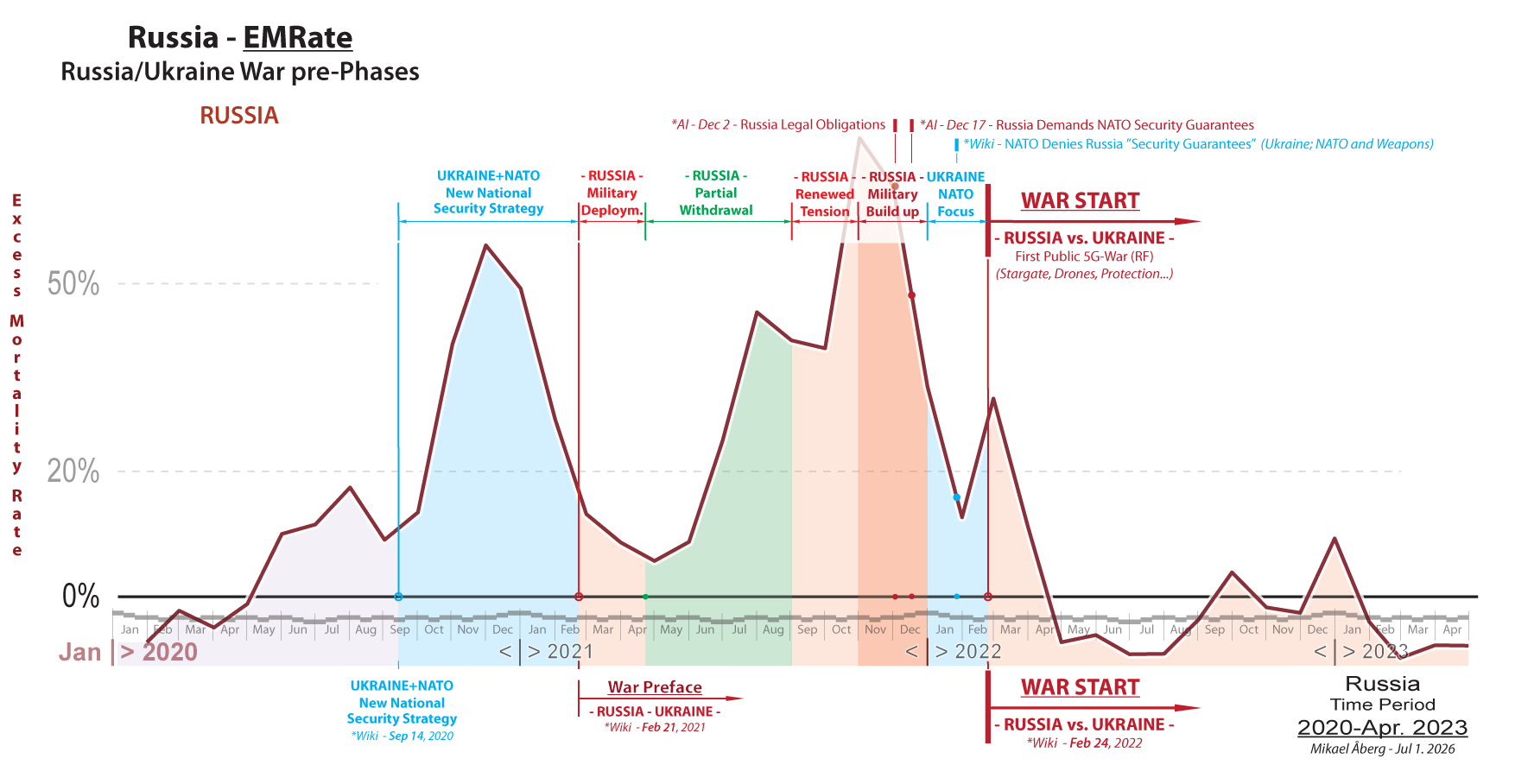
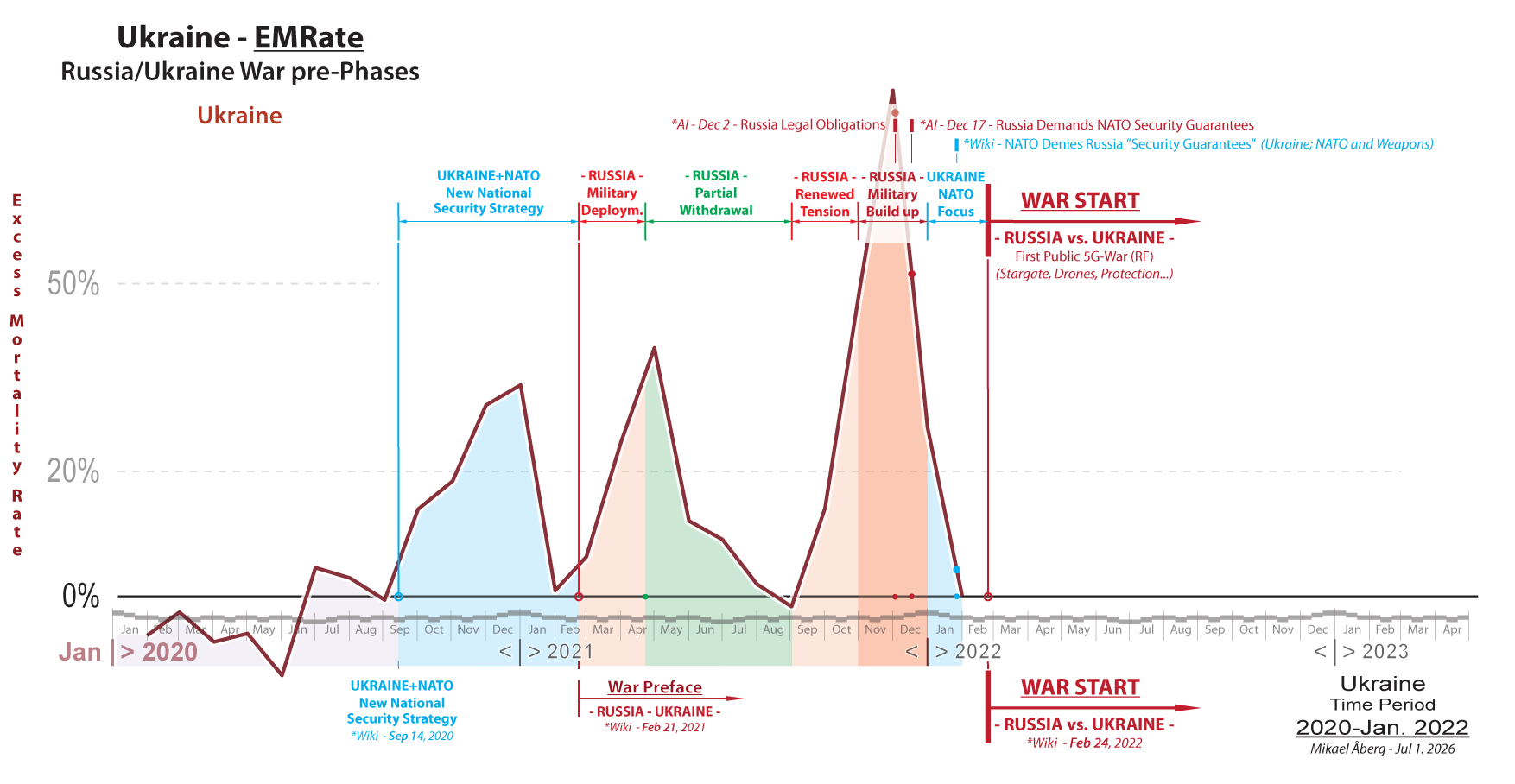
| Picture = Link | Russia-Ukraine pre-war phases vs. EMRate |
New Window |
|||
 |
 |
 |
 |
 |
 |
Russia |
Ukraine |
Eastern Europe |
Western Europe |
U.S.A |
Asia Tech |
Strong correlations: AI - EMRate reduction correlates to paused XG expansion (war start)
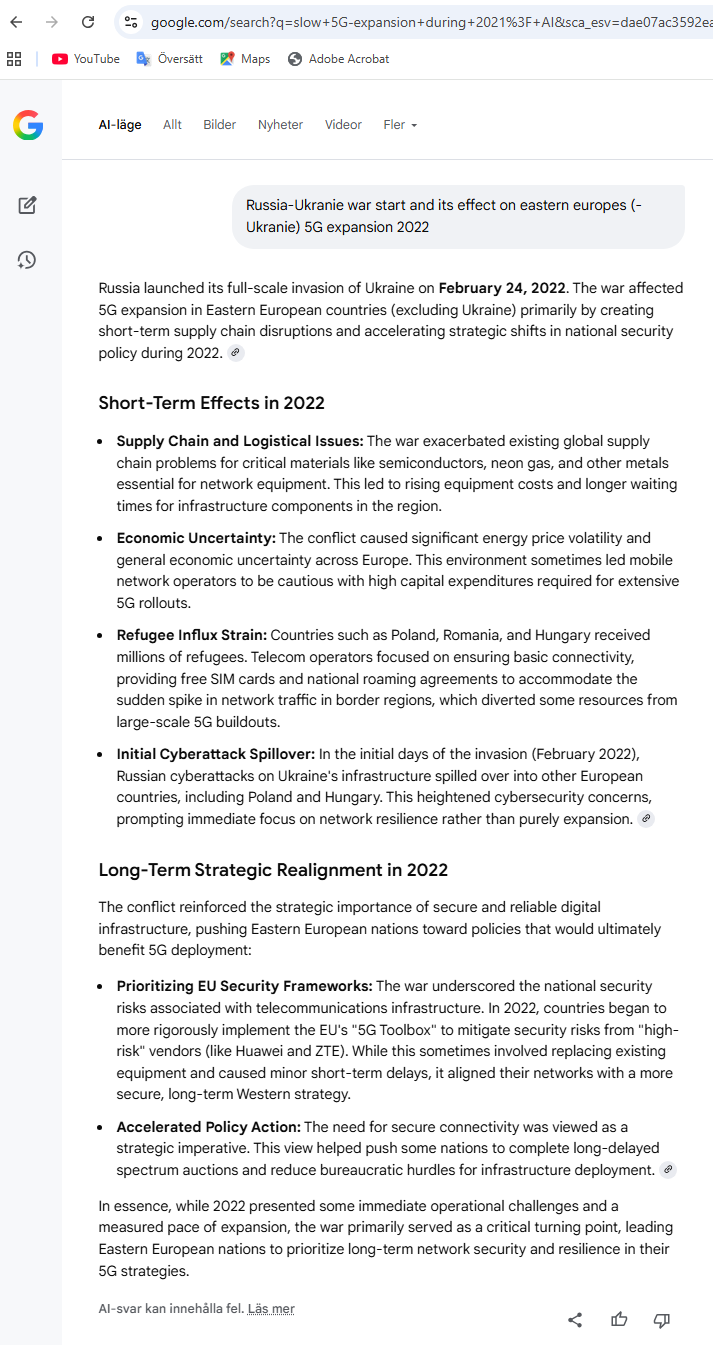
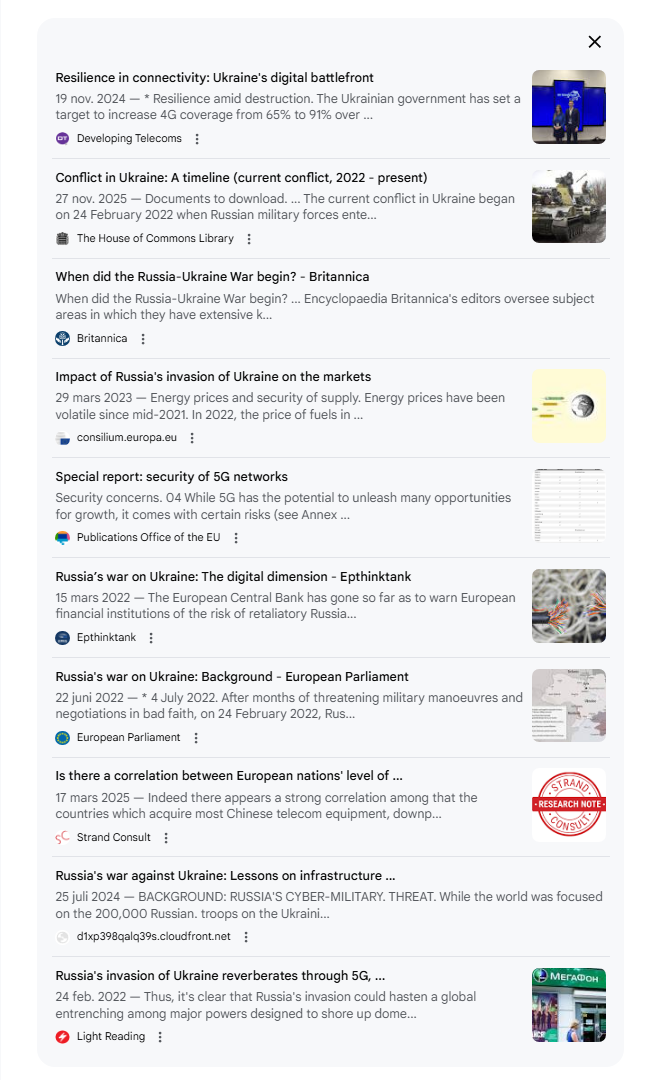
AL Search words: Russia-Ukranie war start and its effect on eastern europes (-Ukranie) 5G expansion 2022 (Dec 5, 2021)
"Close Window"
Links - Opens in New Window - Links
Links West: EMRate-West (Apr 18, 2025) - Zero 5G Devices - 95 5G-Devices=In practice, first real world 5G-networks setup phase
Links East: EMRate-East (Jun 22, 2025) - Albania 4G+ - Bulgaria - Poland - Slovakia - Romania - Czechia - Slovenia - Croatia - Lithuania - Hungary - Latvia
-
Links - Reflections, 5G-expansion: November 2020 - April, 2021 - February 22, 2022 - May 23, 2022
War Links: *Ru-Wiki - US 5G Security Agreement - - - AI-pictures page end: *AI-Dec 2, 2021 ;; *AI-Dec 17, 2021
AI references (pictures)
*AI-Dec 2, 2021 (International obligations)
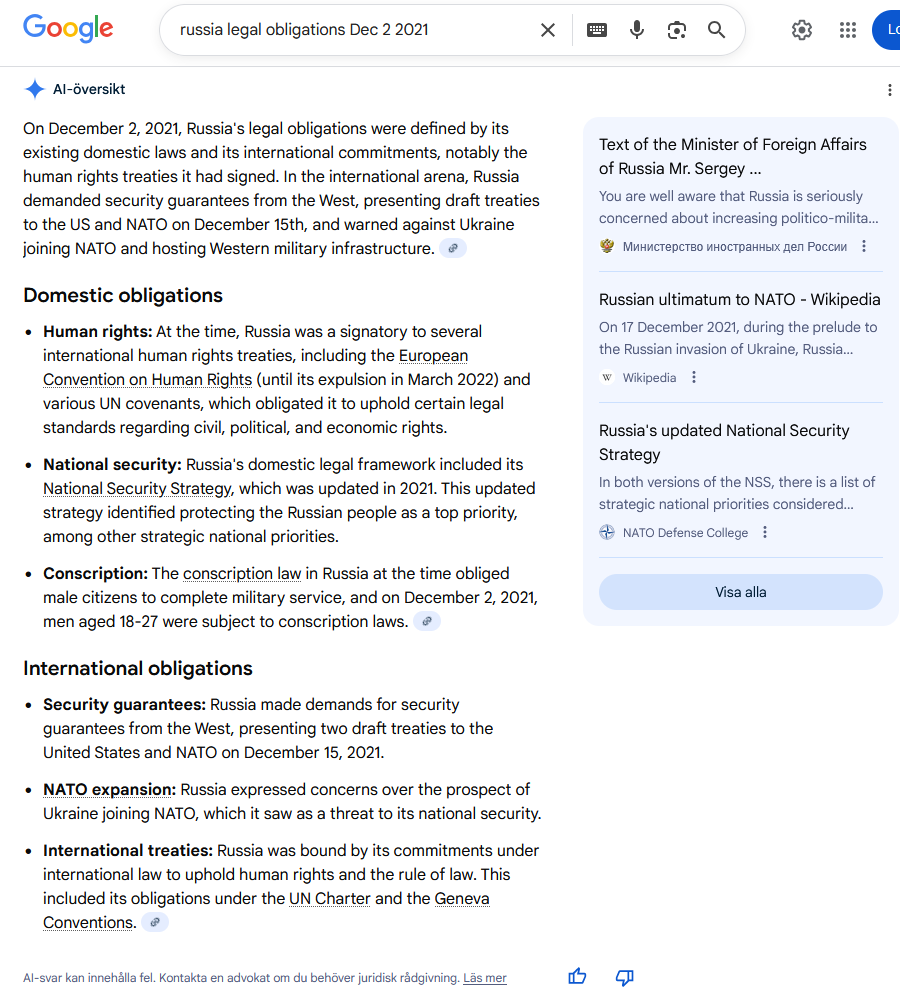
AL Search words: russia legal obligations Dec 2 2021 (Dec 1, 2025)
*AI-Dec 17, 2021 (Russia demand USA, NATO)
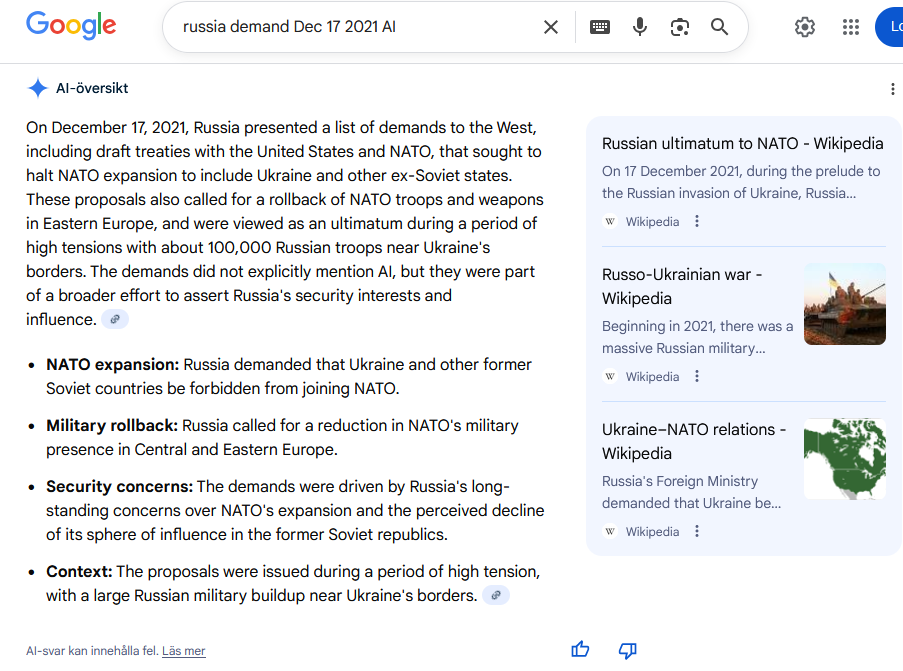
AL Search words: russia demand Dec 17 2021 AI (Dec 1, 2025)
*AI-Jan, 2023 (Strengthening 5G Stance)
AL Search words: eu reconsidering 5G strategies Jan 2023 huawei eastern europe (Dec 9, 2025)
AI references (picture): AI - EMRate reduction correlates to paused XG expansion (war start)